Everyone Lies About How Much They Ski
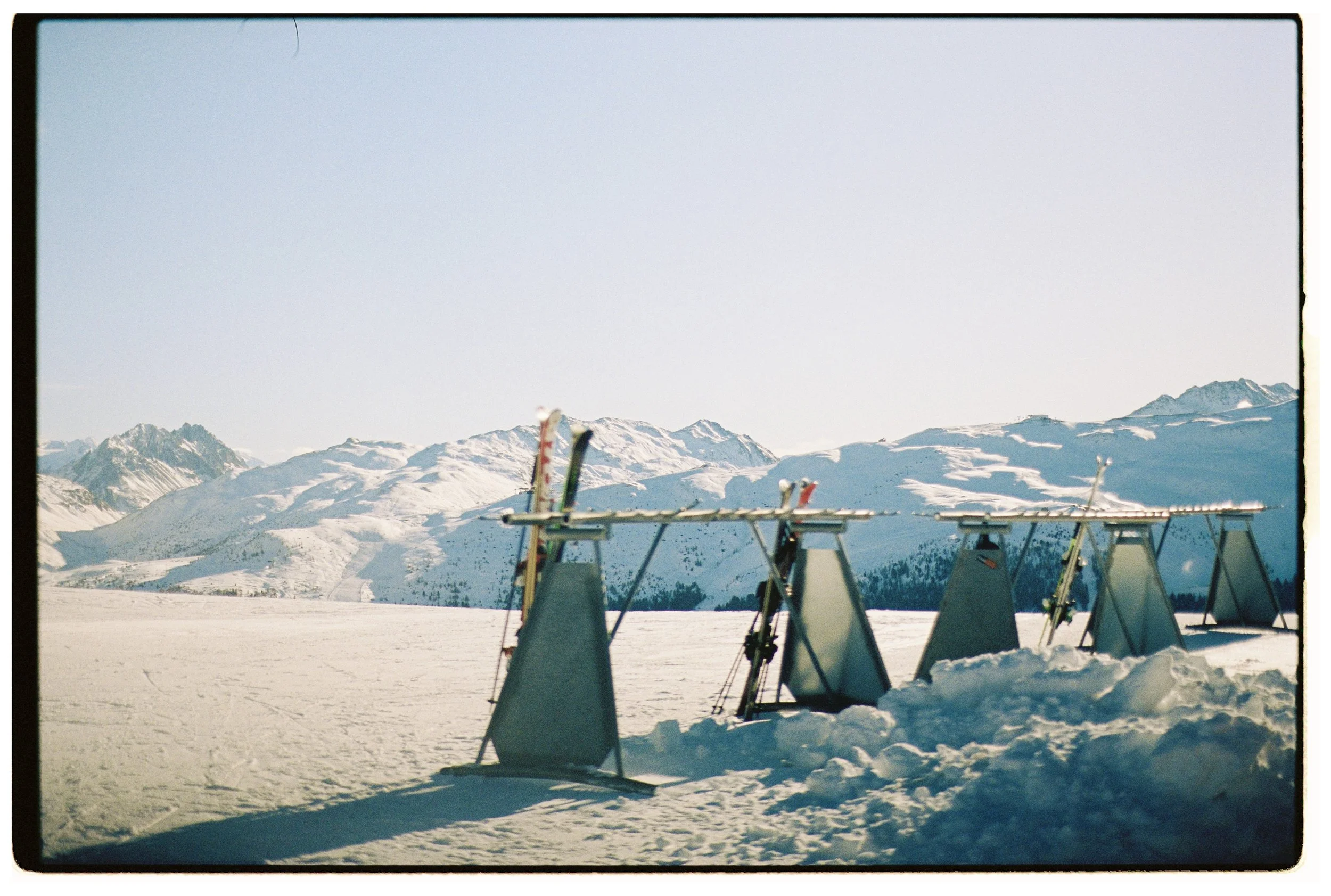
Skiing and an overabundance of fairy lights and maybe, at a push, beautiful jackets are the only real things I can get around about winter. Everything else — the cold that lingers, the shortened days, the way time seems to thicken to slow goo — I tend to tolerate rather than embrace. But put me in a European ski town in January and I can be your glacial gal. Winter, here, offers a structure you can step into, that looks an awful lot like glamour.
Skiing itself is only one part of the arrangement. The rest is made up of shared understandings that no one ever explains but everyone seems to know. At nine in the morning, grown adults step into Lycra and an absurd number of layers with surprising confidence. Helmets are fastened before caffeine. Goggles appear indoors, resting on foreheads like punctuation marks. Our gait changes to a heel-to-toe cadence, unless you’re a snow boarder…(thou shalt not judge 😜). No one remarks on it. This is simply how the day begins.
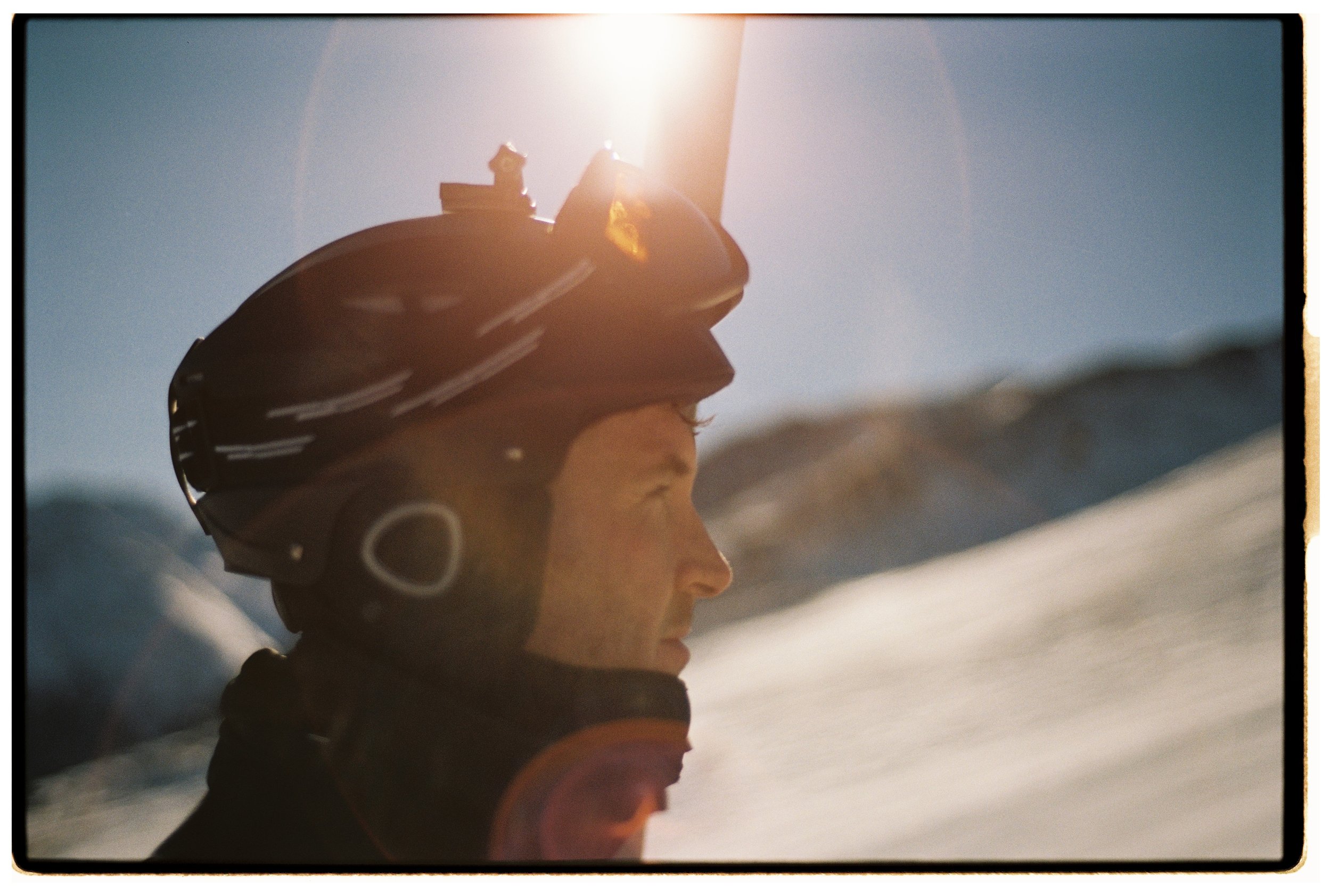
There are, inevitably, the First Lifters. They are already dressed when it is still dark. They have studied the lift map and cannot tolerate waiting in line when there is perfectly good skiing to be done. Fresh powder is treated with reverence. Breakfast is a logistical inconvenience. I am married to one of these people, and have learned that their impatience is not personal, it is directional. They know where they are going, and the mountain is not to be dallied with.
Then come the Slow Morning Indulgers, often nursing sore shins and an unwavering belief in the restorative power of coffee in bed. They appear mid-morning, unhurried and well-fed, just as the sun begins to behave properly (this would be my natural inclination). A second coffee is non-negotiable. Their timing is exquisite: enough runs to feel accomplished, early enough to make lunch feel deserved. They understand that winter mornings are not for urgency.
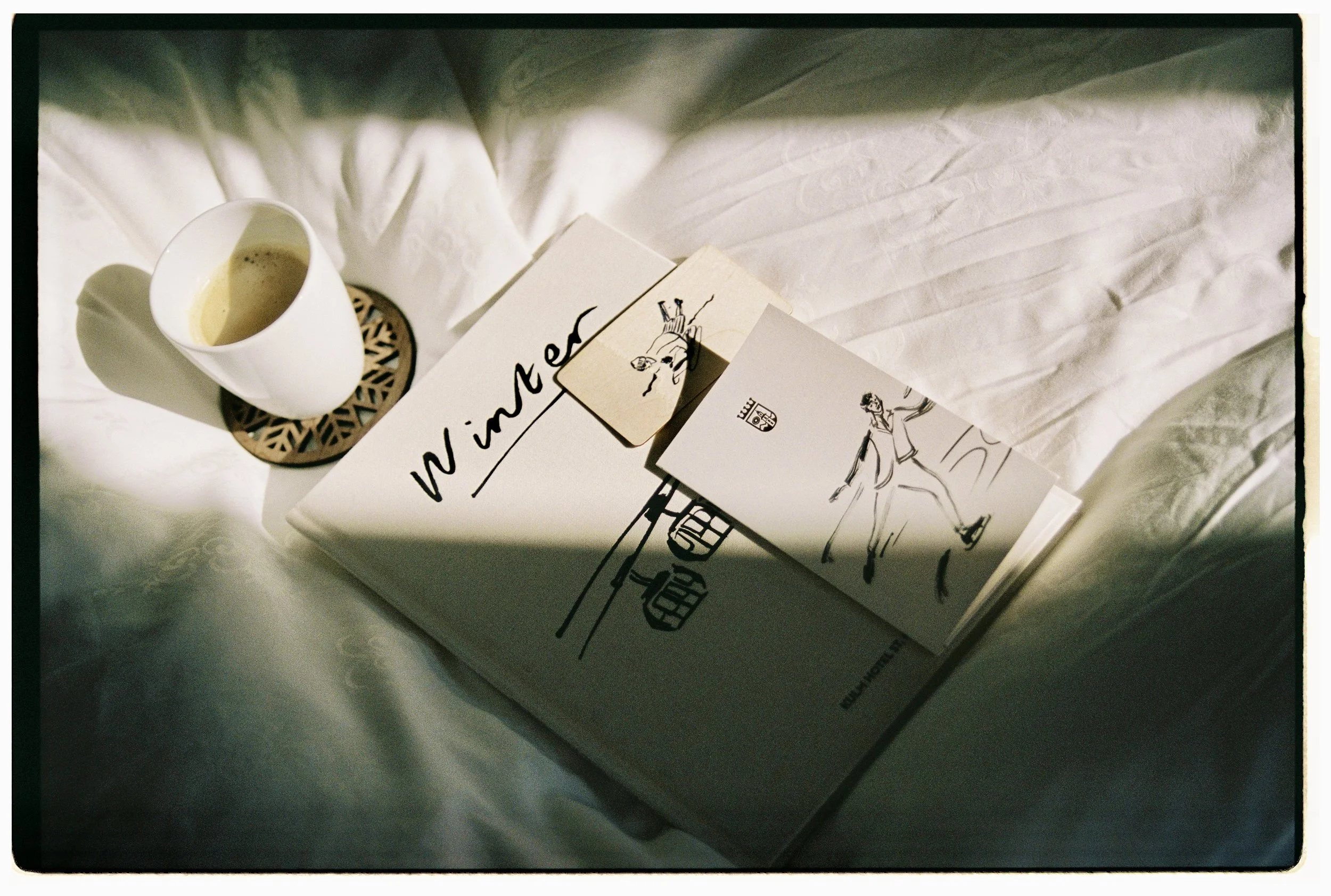
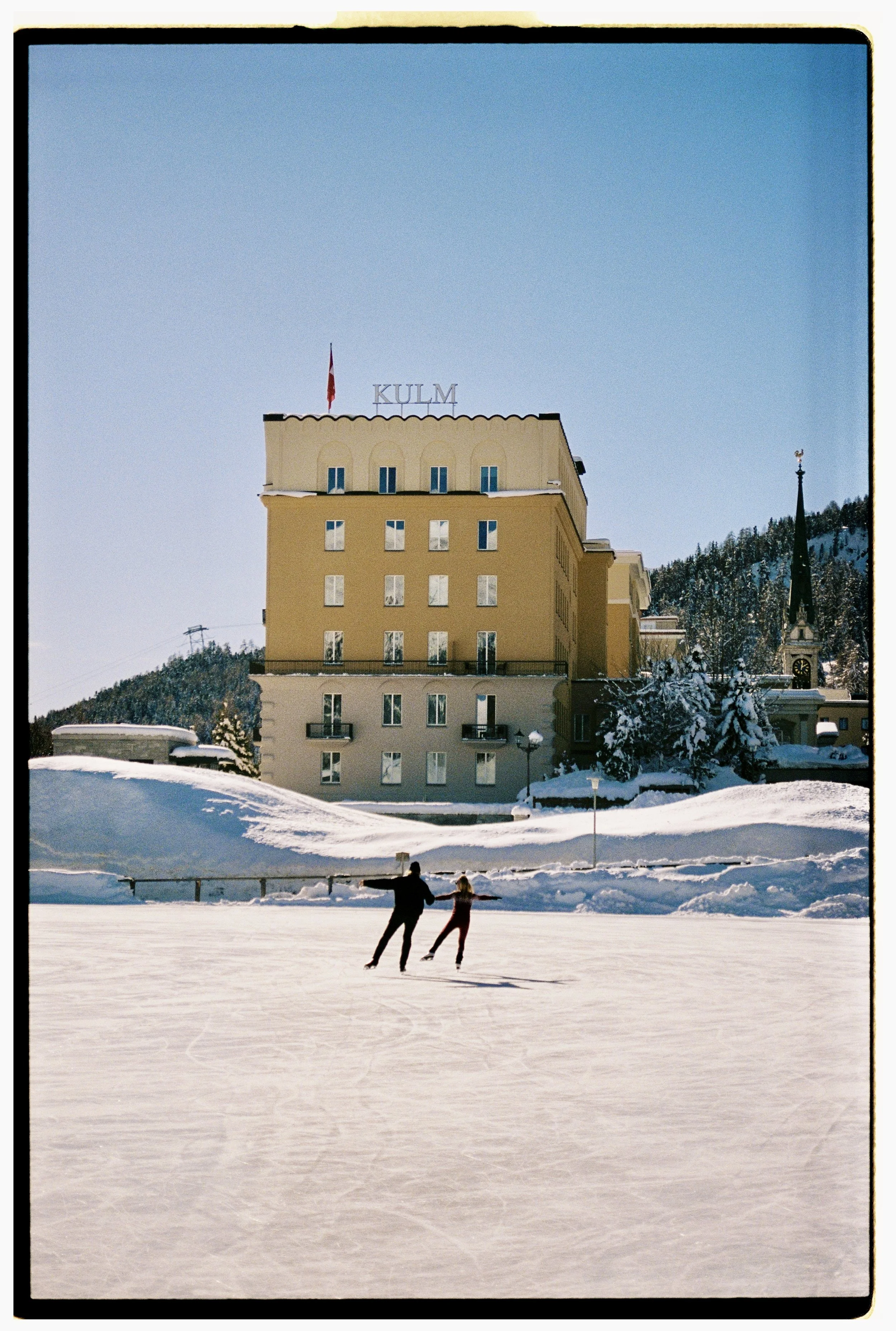
Kulm Hotel
It’s important to note that clothing, in ski towns, does a particular kind of work. It is practical, but also expressive in a way that feels relaxed rather than strategic. Good jackets carry the day. Boots move easily from snow to wood floors. Helmets stay indoors longer than they should. Nothing feels precious. Everything feels ready to be worn again tomorrow. Among the folks here is the Impeccably Prepared One — gloves always dry, layers always right, producing lip balm or hand warmers exactly when required from a pocket you didn’t know existed and that your jacket definitely doesn’t have. She skis well enough not to mention it and disappears the moment conditions turn disagreeable.
By mid-morning, conversations begin to orbit skiing without ever landing fully on it. Skill is gently blurred. Plans remain flexible.
“We’ll see how it goes,” is said by people who clearly know exactly how it will go.
There is a collective preference for understatement. This includes the Quietly Athletic One, who skis clean, efficient lines without comment and is back by lunch, looking inexplicably relaxed. They probably parallel skied the first time they ever saw snow.
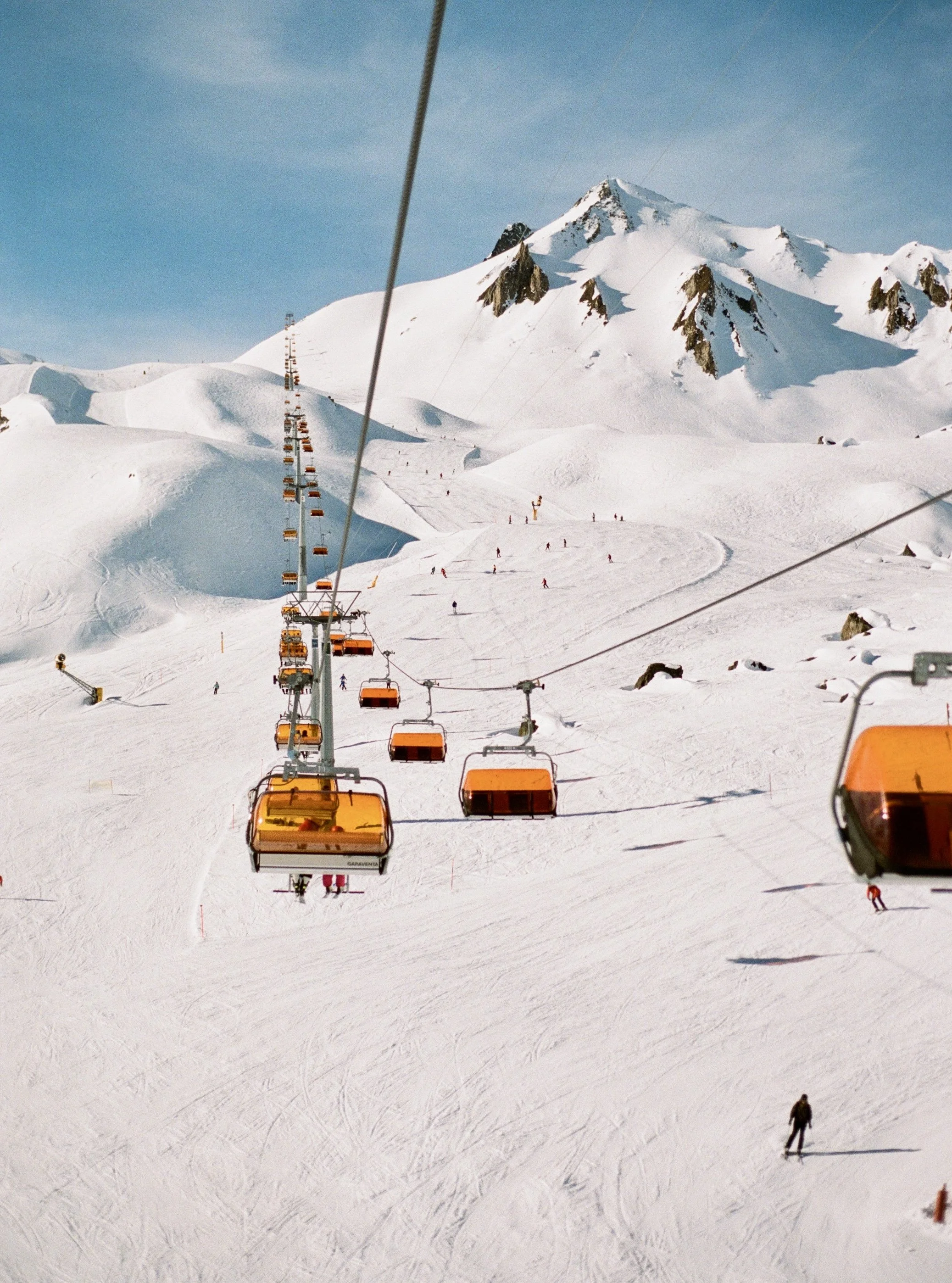
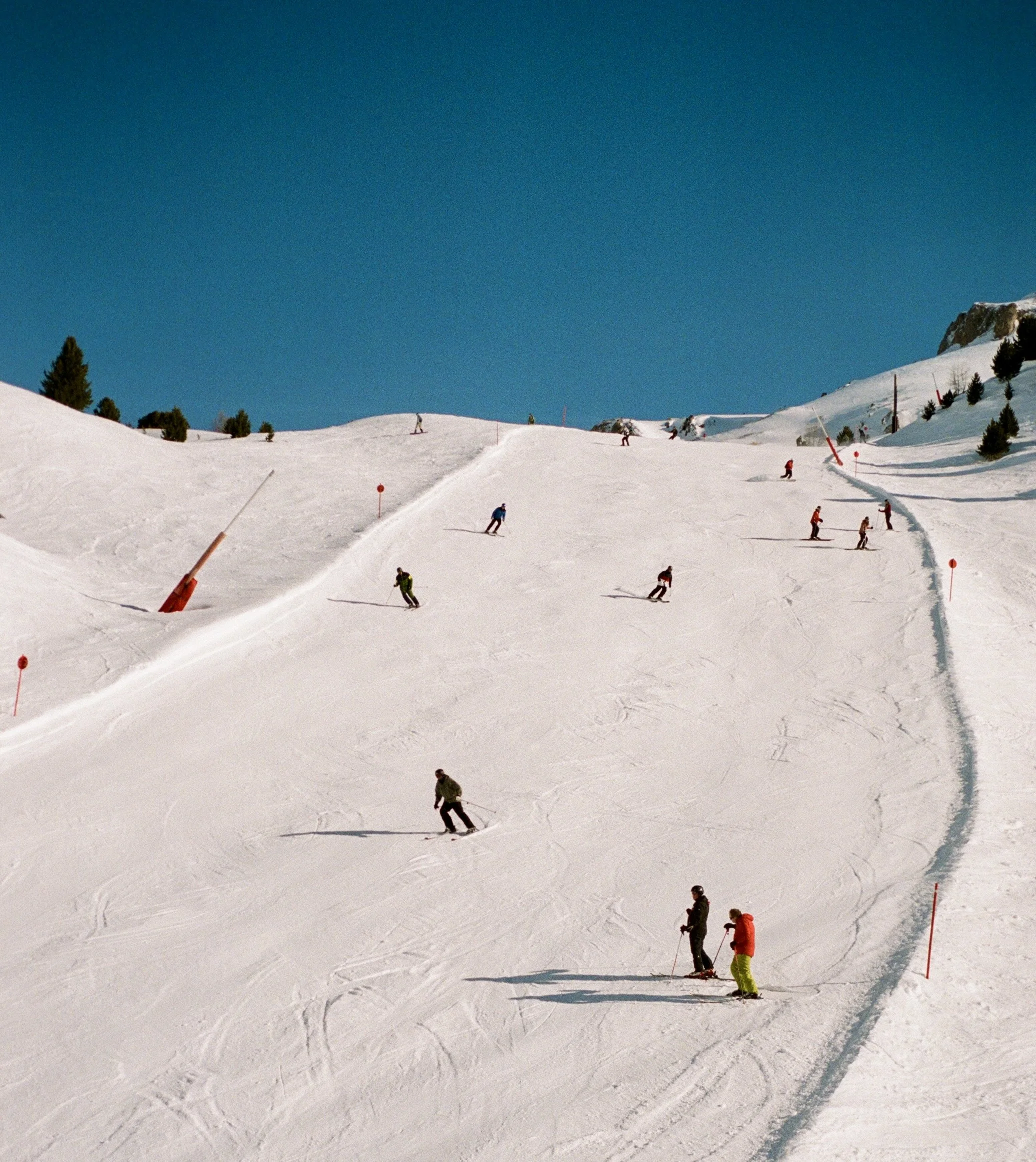
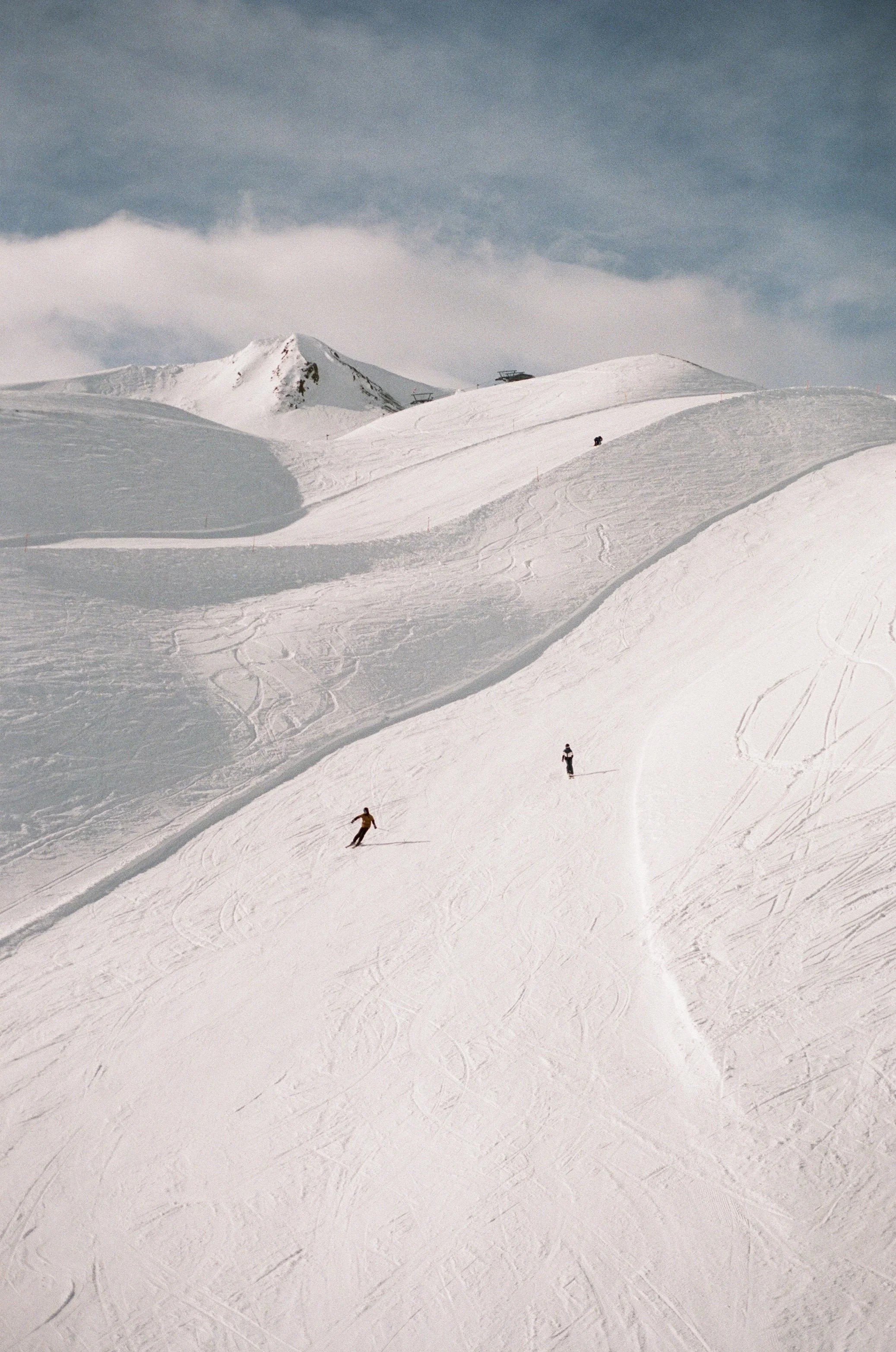
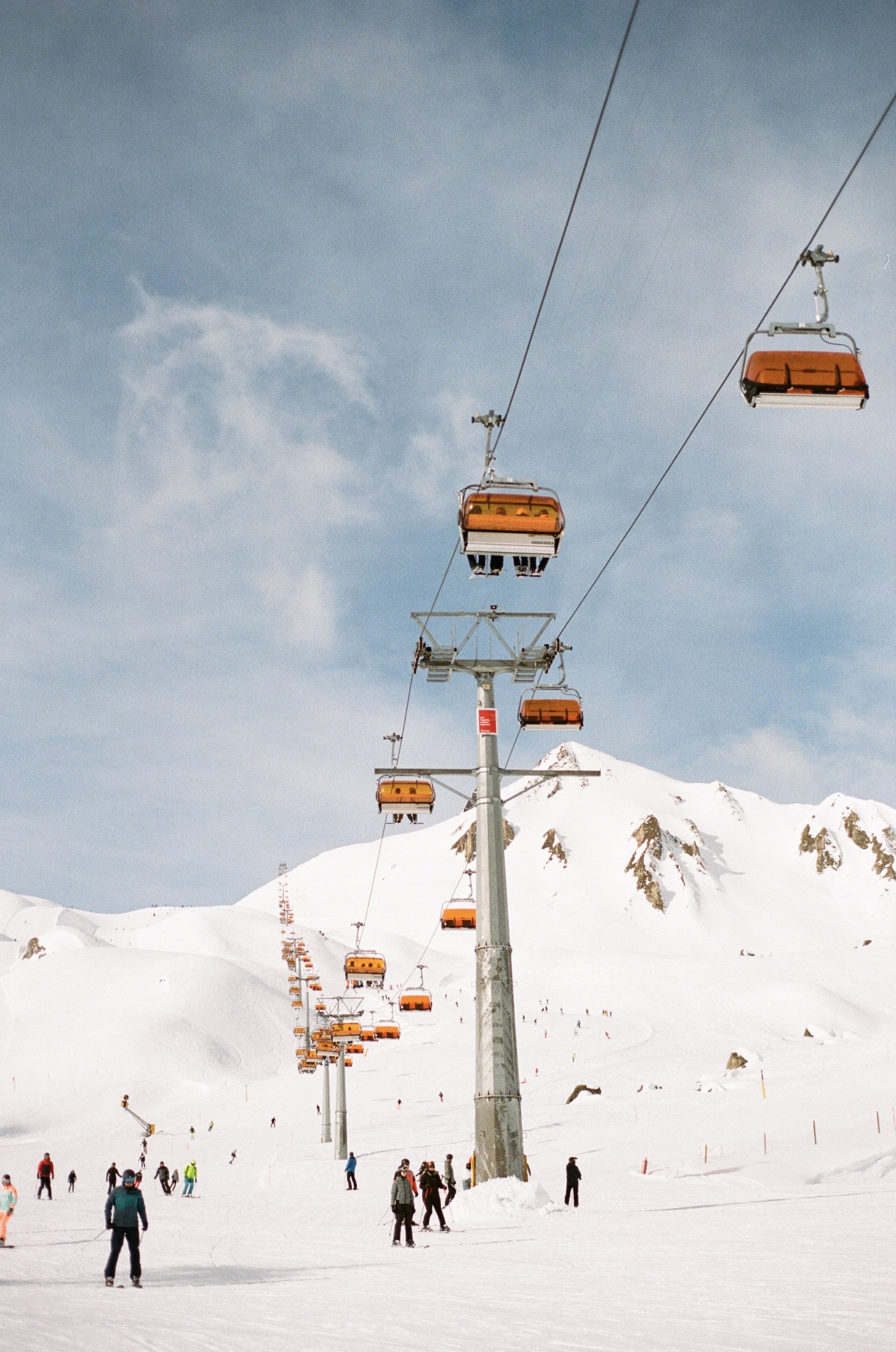
There are rules here, though they are rarely spoken aloud. Cappuccinos quietly retire after a certain hour. Skiing ability is routinely downplayed. Town names are dropped casually, like chapters in a longer story, never dwelled on. Invitations to lunch, to a chalet, to sit at a particular table carry more meaning than any declaration ever could. In ski towns, status and skill is rarely announced. It’s implied by which side of the mountain you disappear to, by how early you stop skiing and how little you feel the need to explain it.
Not everyone arrives at skiing early. The Hopeful Skier comes to it later in life because their parents didn’t see the point in paying the exorbitant amount to teach someone to hurtle themselves down a mountain every time they had a moment off work. The Hopeful Skiers are armed with enthusiasm and optimism and the conviction that their mind can ski better than their body currently allows. We recently went on a ski holiday with such folks. At 5am the morning of our first day, they were googling ‘how to ski’ into their iPhones. Their perseverance is deeply admirable. Their confidence occasionally outpaces their technique. They fall, they laugh (and swear), they try again. Their risk to others is spoken about jovially, with affection, usually from a safe distance.
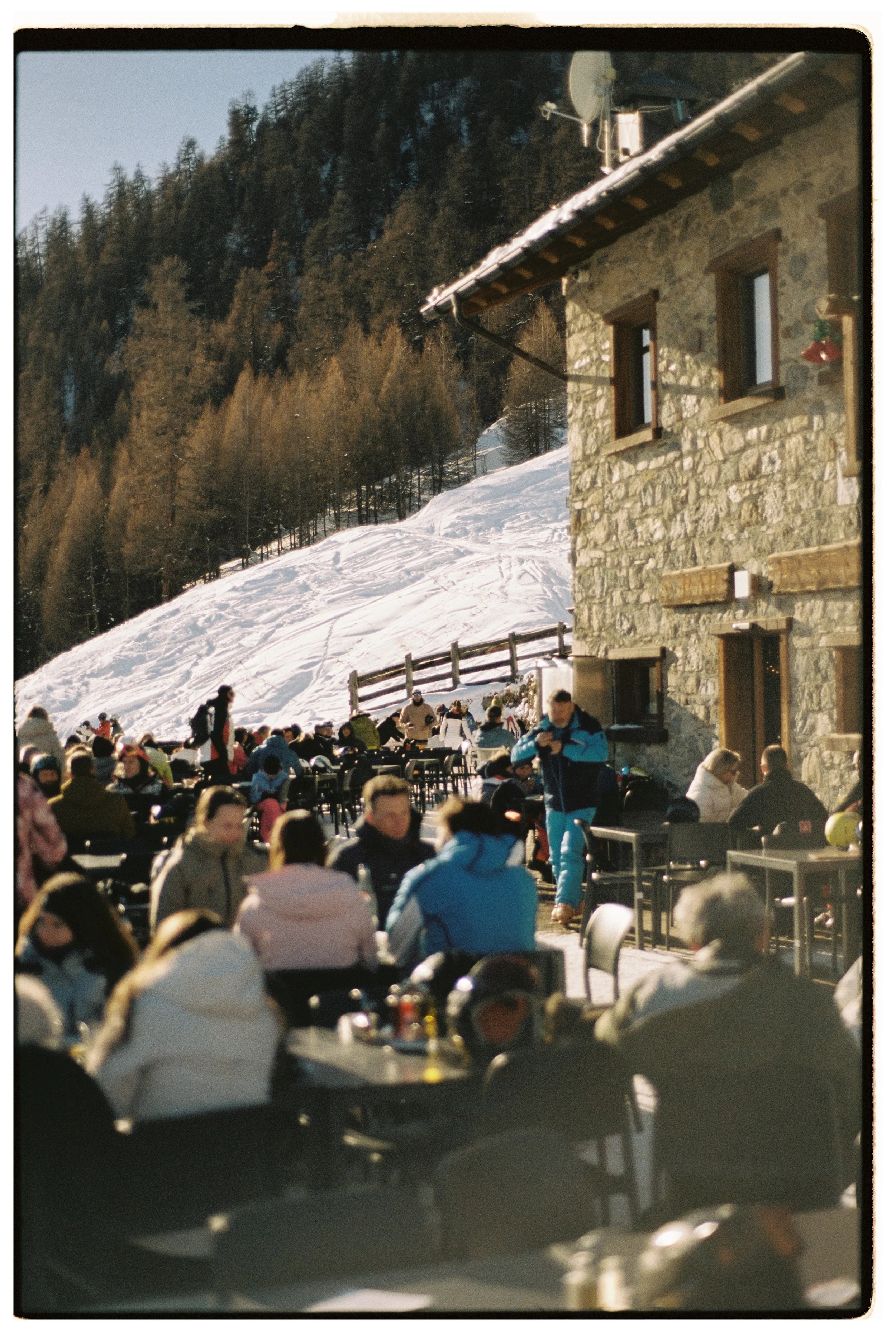
Lunch is where the rhythm of ski towns truly reveals itself. Sun terraces fill. Gloves are removed and forgotten. Stories stretch. Wine appears without discussion. Skiing becomes something that has already happened, even if the afternoon technically remains, as does a whole mountain to get down. Afternoons are optional. Some people return to the slopes; many don’t. No one asks why.
By mid-afternoon, another ritual takes over. Après-ski begins. Not discreetly, but decisively. Three o’clock at the earliest, five at the most common, becomes a cultural turning point. Music grows louder than necessary. Conversations soften, then fragment, then re-form with new people. Old Eurovision hits you’ve never heard blare over the speakers. Ski boots persist long after they should have been removed. Tables become communal. Après-ski is what happens when cold bodies decide they’ve earned warmth, loudly.
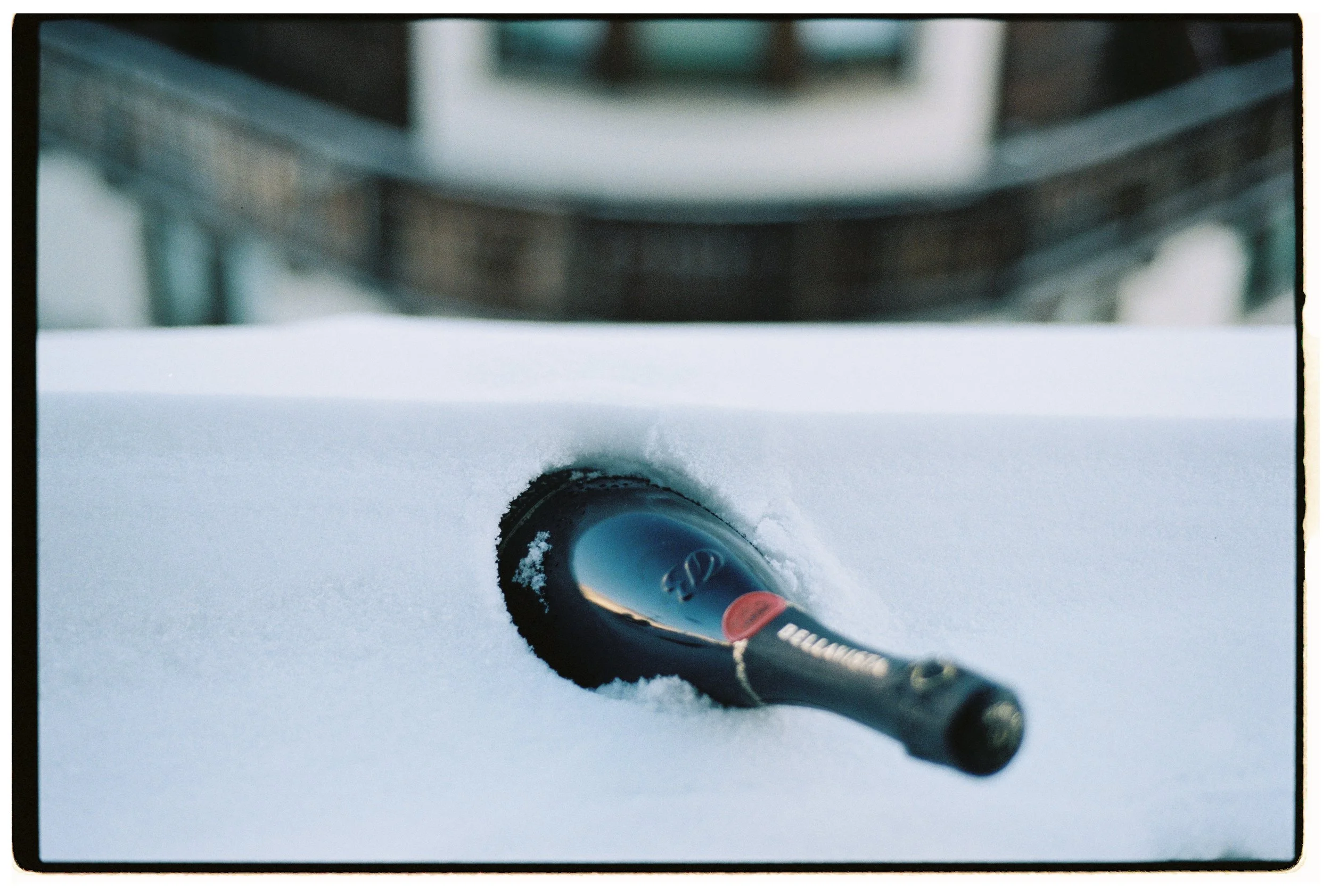
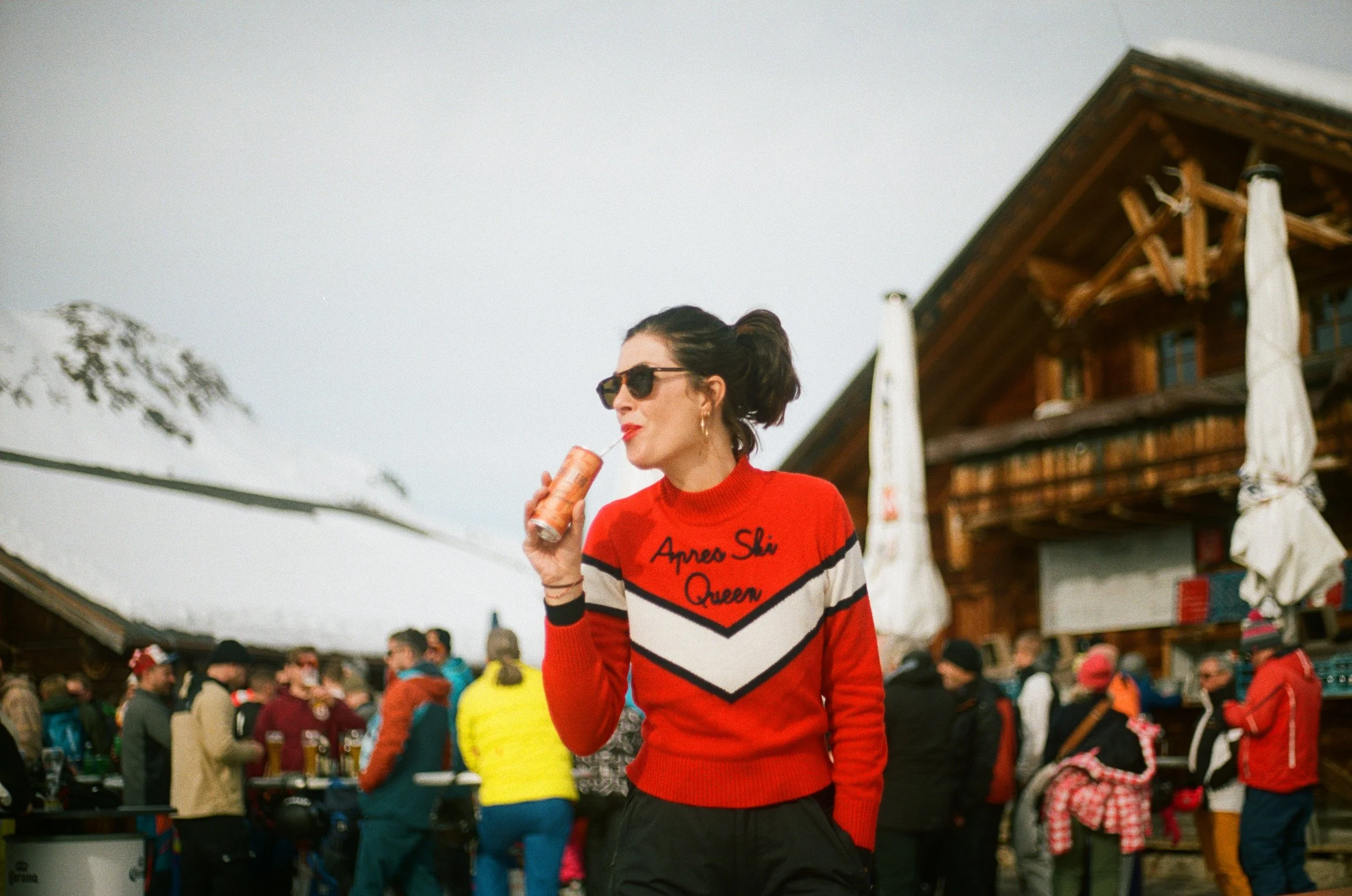
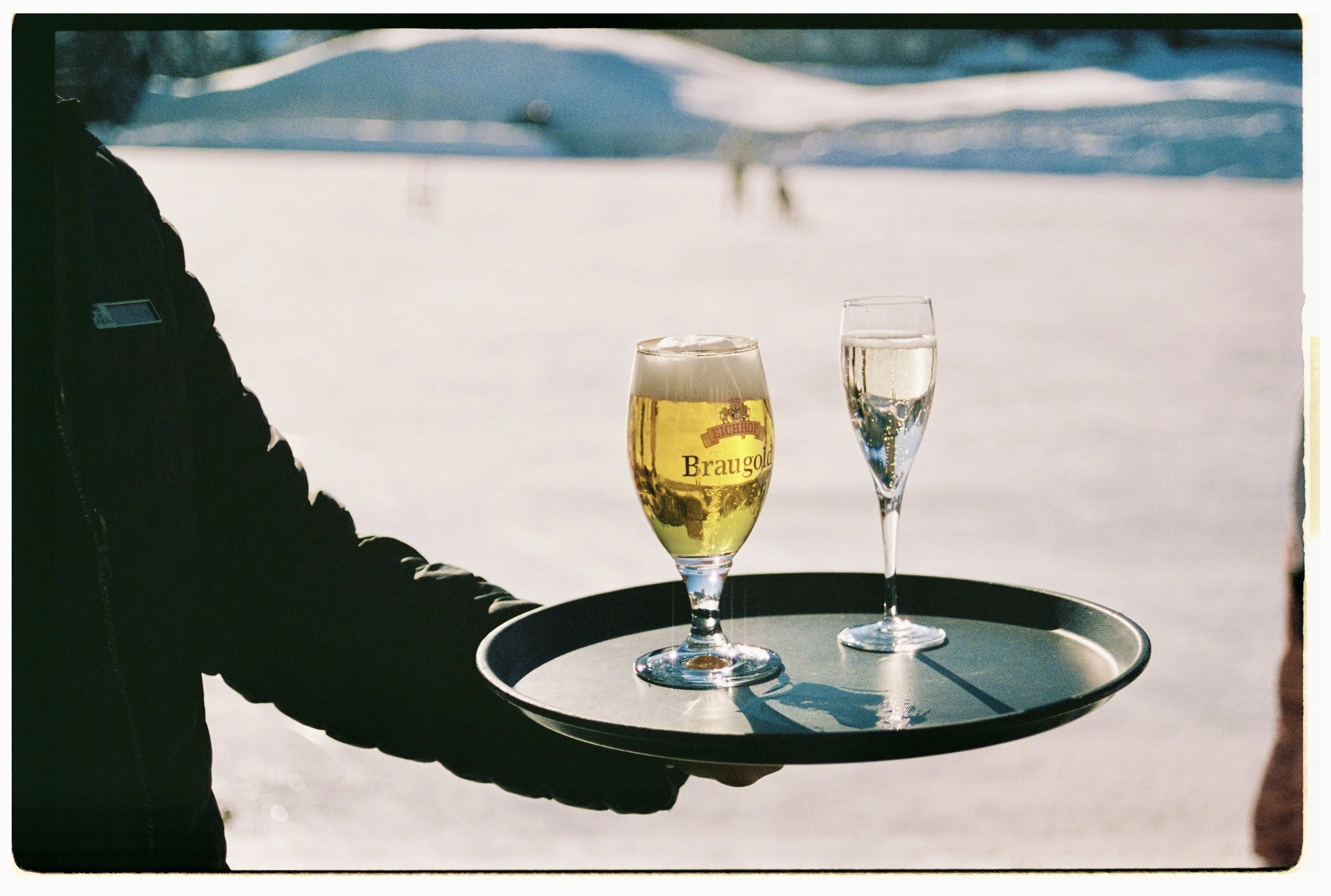
At the centre of this is often the Après Anchor — the one whose table fills without planning, who orders well, listens well, and stays longer than expected.
However, not everyone is here to ski. Some never were. In every ski town there are spa-goers, readers, walkers, watchers. The Elegant Non-Skiers dress perfectly for snow without ever intending to touch it. They read well, walk well, linger well, dress fabulously without function. Their contribution is presence. They know exactly where to sit and wait and never apologise for doing so. Wintering, here, includes opting out — calmly, confidently, without explanation.
Then there are the Peak Skiers. They have skied since they could walk. Their movements are economical, almost casual. Often large European men, they glide rather than descend, as though the mountain has agreed to assist them. By late afternoon, however, gravity begins to renegotiate the terms. After a few hours of après, their bodies soften. Watching them ski home in the evening can feel a little like watching a slinky come down stairs - still impressive, just far less predictable.
Somewhere between all of this is the Returner — the one who skied years ago, in childhood or another life, and has come back to it now. There is muscle memory mixed with slight and quiet hesitation. Each run is both nostalgic and new. Winter, for her, is about re-entry rather than mastery.
What’s striking is how fluid these roles are. No one seems particularly invested in remaining any one type. People shift between them by day, by mood, by snow conditions. Winter allows for reinvention - sometimes all before lunch.
This may be why everyone lies a little about how much they ski.
“Only in the mornings.”
“We kept it easy.”
“Nothing too intense.”
The embellishment, if there is one, always moves in the same direction. It’s not malicious. It’s communal. A way of saying: we’re all just here to be human for a few days.
In the end, skiing feels less like the point and more like the premise. An excuse to dress slightly impractically, drink earlier than usual, and loosen one’s sense of identity. And my god, is it fun.
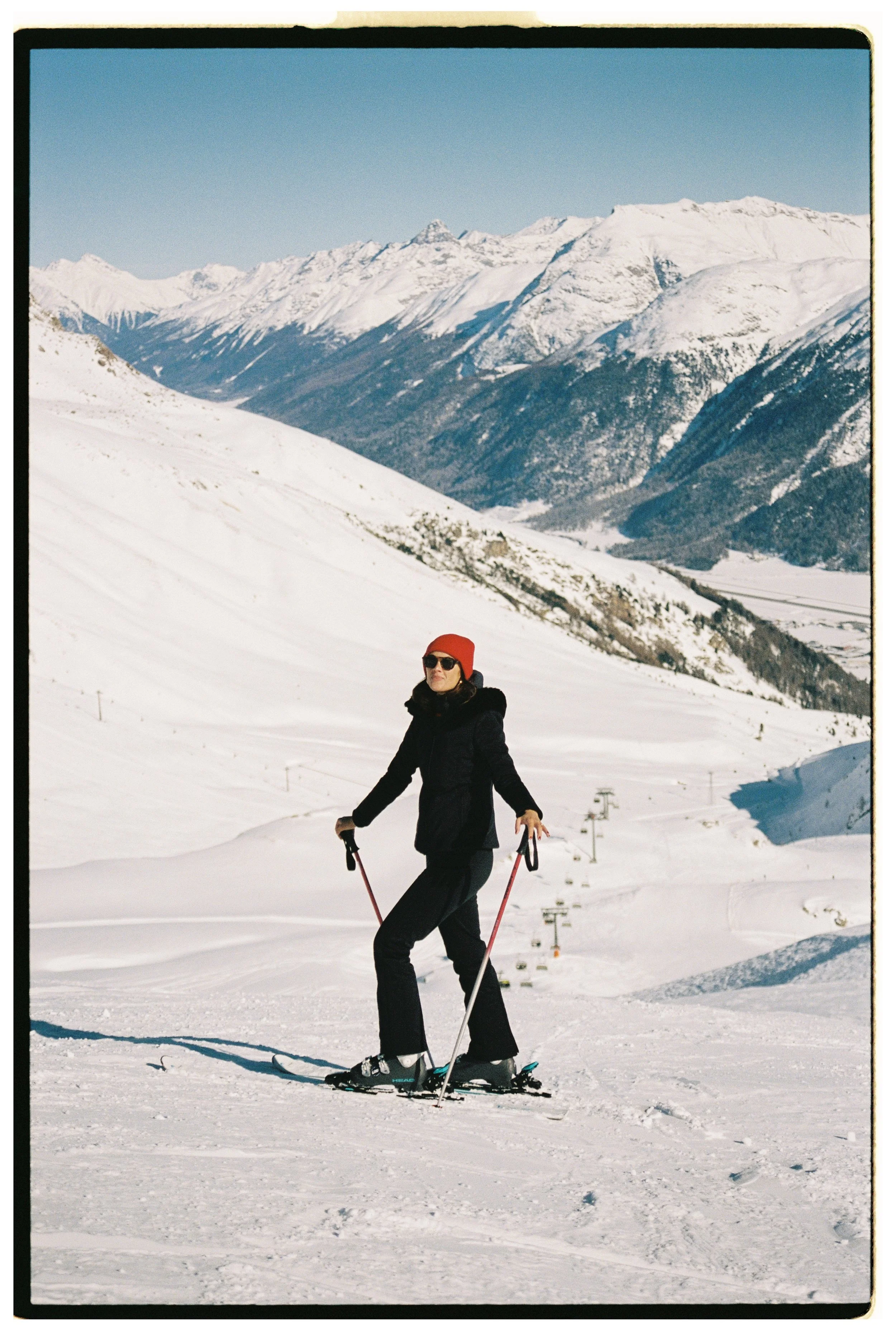
In truth, my affection for ski holidays runs deeper than the rituals. They were my favourite trips as a child. Long drives through the dark mornings, Everything But The Girl on repeat in the car. A crush that evolved slowly over years - from a fellow Milo kid (it’s an aussie thing), to a first kiss, to a boy who moved to Europe and learned to really ski. My sister was a baby when we started going on these trips; I’m not sure she ever actually learnt, but she always looked perfectly cute in her little starfish suit, bundled up and unbothered.
What’s funny is that I barely remember the skiing itself on those childhood trips. I know we did it — I started young, around three or four — and I know how to ski now. But the memories that surface are warm ones. The kind that seem to belong to another version of winter entirely. It may even be the last time, until very recently, I remember winter feeling like that.
Now, these are the days I look forward to most. Waking up to crisp skies and fresh snow. Holding my husband’s hand as he tries, and fails, each year to convince me to snowboard instead. I shout that I’ve “got it” until he lets go, and I absolutely do not have it. The day unfolds with whatever mix of silliness and athleticism it has planned, always with the promise of schnapps at the end.
Perhaps that’s why everyone bluffs about how much they ski. Because skiing isn’t something to tally or measure. It’s a way into a feeling. The warmth inside the cold. The light at the end of the day. The sense that winter, for once, is working with you.
For me, at least.
Ten Things to Take on a European Ski Trip
(Some practical. Some indulgent. All intentional)
1. A Ski Jacket You’d Happily Wear to Lunch
It should be warm, well cut, and as believable indoors as it is out. My go-to brand: Oysho
2. Cashmere Layers (Plural)
Thin enough to ski in, soft enough to nap in. Cashmere earns its keep on a ski holiday: base layer by morning, après layer by afternoon, dinner companion by night. Intimissimi make some very sexy staples that I always pack with me.
3. Proper Ski Goggles
There is very little worse than having booze goggles on your way down the mountain, as well as ski goggles with terrible visibility. I am a huge fan of the classic look of Vallon’s Goggles, particularly the Freebirds in their classic off-white.
4. A Pocket Playlist
One winter-only playlist you listen to every year - on drives, on lifts, on the walk home. Music has an unfair advantage when it comes to memory and ski trips deserve a soundtrack.
(Everything But The Girl would approve.)
5. Lip Balm You’ll Genuinely Wear
Cold, wind, altitude — this is not the time to suffer.
6. A Book That Matches the Mood
Not something hoity-toity, something immersive. Ski holidays are made for proper indulgent reading — long afternoons, early nights, white-out days when you can read that book you’ve been holding onto.
7. Thermal Socks You’d Let Someone See…or even take off
Warmth matters, but so does dignity. The right socks make ski boots tolerable and lingering over drinks possible. If they’re presentable when boots come off, even better.
8. A Board Game or a Beautiful Pack of Cards
For evenings that stretch unexpectedly. For fires, wine, and the particular intimacy that only arrives once the skiing is done. Choose something tactile, well-made and easy to play without instructions or after a few drinks. I’d be remiss to not mention Perudo here… #IFYKYK
9. One Going-Out Outfit that you Feel FABULOUS in
Nothing fussy or that needs ironing. Something that works with winter boots, flushed cheeks and tired legs. Ski towns reward ease. Ideally something that withstands a dance floor.
10. Red Lipstick
Because after a day wrapped in layers, a single decisive detail feels wonderfully intentional. Red lipstick has a way of making winter dinners feel like occasions, even when you’re still wearing yesterday’s knit. I also am a fan of a red lip on the slopes.
Dramatic? Me? How dare you 😉 My pick for a red lip will always be Violette FR for long wear and Guerlain for luxury.
Words and Film Photography by Lex Duff.