Reflections from a Newgrange Lottery Winner
Yours Truly, a Woo-Woo.
Devon Miller
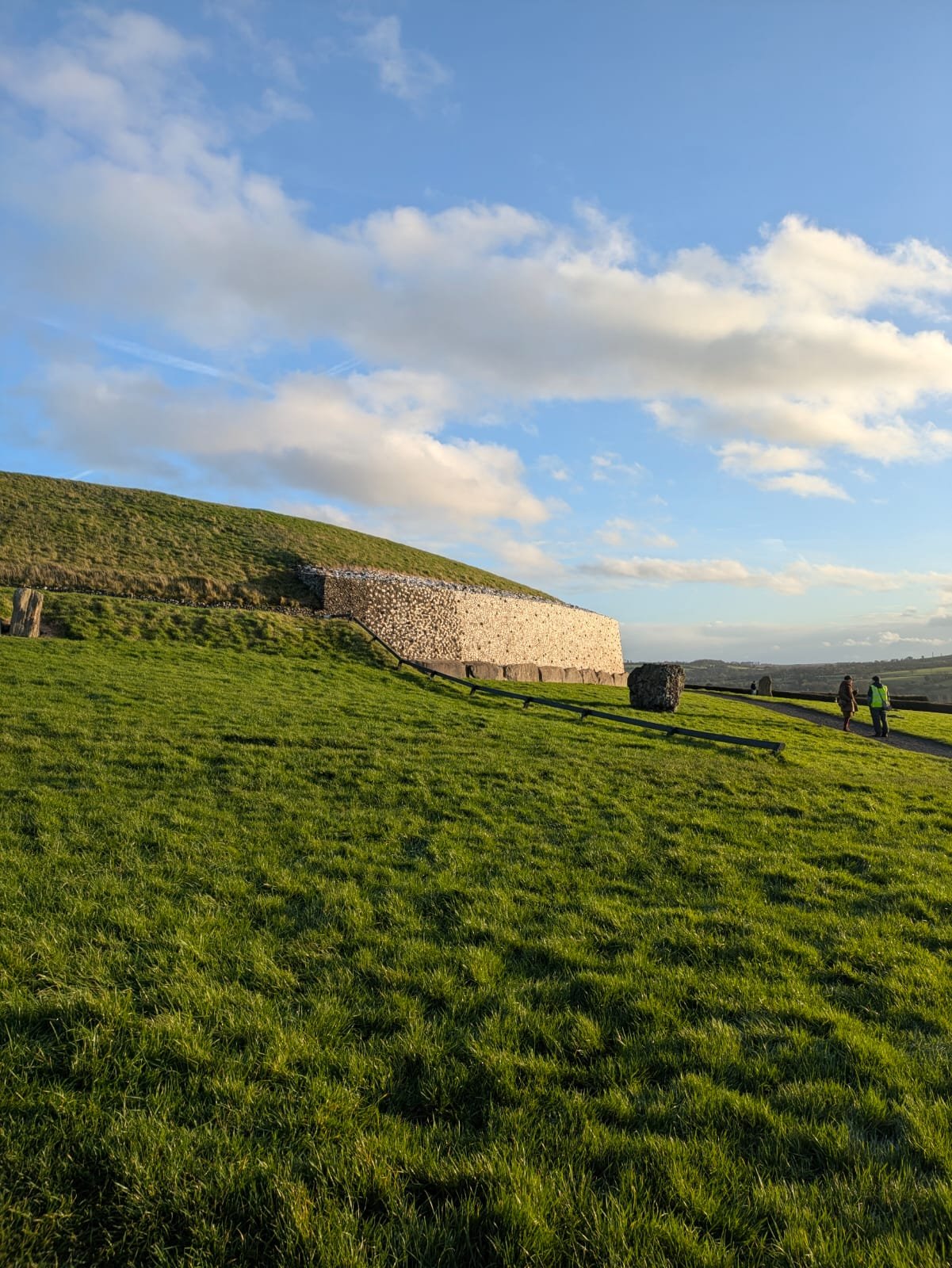
I’ve always been drawn to the primordial, long before I was aware of the word's existence. Ancient structures, mythologies, and sacred sites serve as the foundation of my inner spiritual landscape. The belief that our ancestors understood the spiritual in ways we’ve lost or forgotten— a tempting fruit, and oddly comforting in the banality of our modern world.
And while it’s comforting, it also fills me with great sadness, which is amplified when I visit one of Ireland’s many Neolithic monuments.
Ask anyone who’s drawn to such spaces, and many will say the same. Such places evoke bewilderment, wonder, sorrow - a longing to understand what our ancestors built the structures for, and an abhorrence at the notion that they were merely geographic markers or graveyards.
Maybe we’re all just a bunch of loopers, but looper or not, entertaining spiritual possibility is simply—well—a fun way to live. And quite primordial, if I do say so myself.
As a self-proclaimed looper, I’ve always dreamed of winning the Newgrange lottery, as many fascinated by ancient Ireland do. If you don’t know what Newgrange is, or the Newgrange lottery, well let me tell you.
Newgrange is a five-thousand-year-old Neolithic passage tomb that was controversially restored in the mid-60s to early 70s (I happen to think the ancients would greatly approve of the refurbishments, but moving on…). Other than its quartz facade (which eerily resembles a spaceship) its focal UNESCO-worthy feature is the passage’s alignment with the winter solstice sunrise. Every year for a five-day window, if the sun manages to break through the horizon, it beams through the main passage and hits the back of the central chamber for approximately 15 minutes, filling the floor with an otherworldly amber glow. Afterwards, the chamber returns to its primary state of inky blackness, which it will remain in until the following year. Archaeologists have confirmed this alignment was intentional in its construction (well done, Neolithic peoples! We’re very impressed).
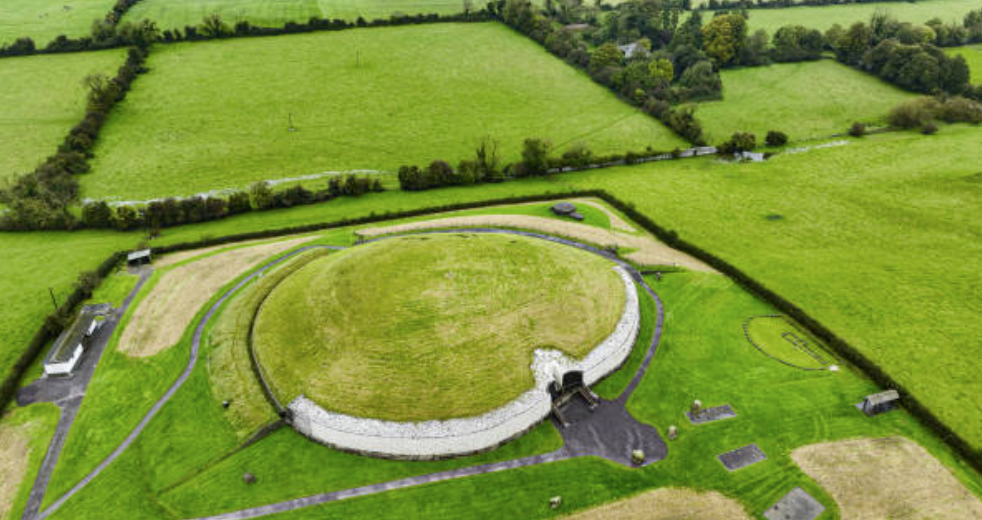
Every year, the Office of Public Works hosts a lottery to allow 40 people, divided into groups over a five-day window, to stand in the passage chamber to witness the phenomenon with a guest of their choosing. It’s fairly competitive, some years amassing over 30,000 applicants. Winning is like the woo-woo equivalent of winning tickets to the Eras Tour.
I always enter because, well, why not? I never expected to actually win. So, when I received my email informing me I had in fact won, I assumed it was a scam. Thankfully, the woman at the OPW was able to convince me otherwise.
So, what happened next? I was the chosen one, of course! My hero's journey had finally begun! I was to uncover ancient, primordial truths!
Of course, that’s not quite how things panned out, but I think I took away something even better, something to alleviate my longing to understand the ancient world.
On December 20th, I woke up in my cozy B&B in Co. Meath full of expectation. Not like, hoping-a-celestial-portal-would-open-precisely-at-sunrise type of expectation, but the type where I might, just might, walk away with some inkling of what the passage tomb was built for, beyond what we already know.
And I did walk away with a few hunches, none based on any archeological evidence whatsoever, but for the sake of folklorists and historians pulling their hair out over Americans interpreting their personal experiences as some sort of mythological fact, I’m going to keep them to myself.
I’ve attended woo-woo events before, some even in Ireland (my apologies to the OPW, who pitch this strictly as an archaeological event, with just a sprinkle of woo-woo). From women’s circles to Bealtaine at the Hill of Uisneach, each event had a palpable energy—something lively and all around me. But when I walked down, down, down the cold, stone passage and into the cave-like central chamber, I didn’t feel anything lively. If those festivals were energy bursting up and out into the world, this was something grounded, going deep, deep, down into the earth.
Once we were all safely assembled, our guide turned off the lights, submerging us in darkness—the kind where you couldn’t see your hand waving in front of your face.
And we waited.
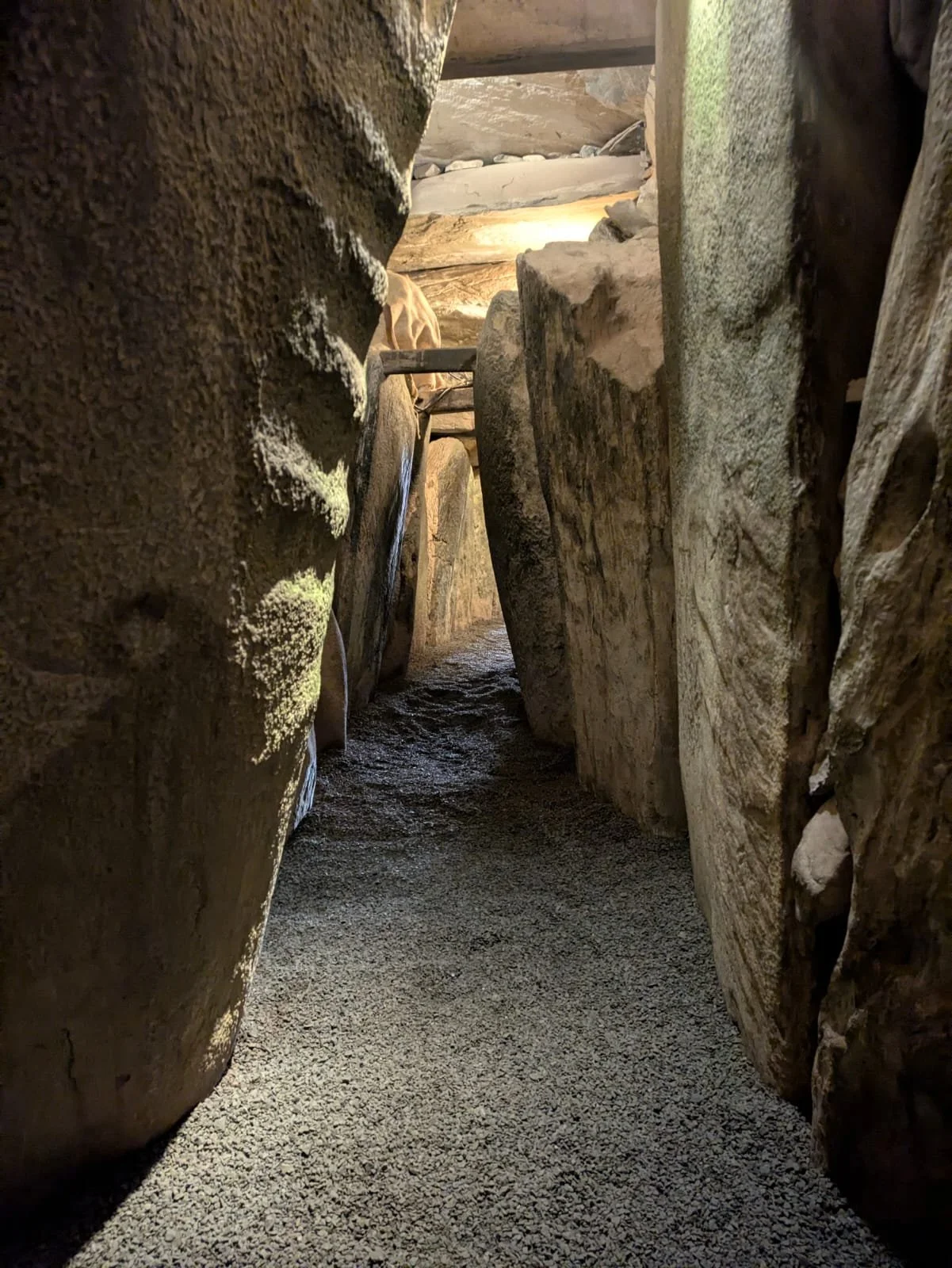
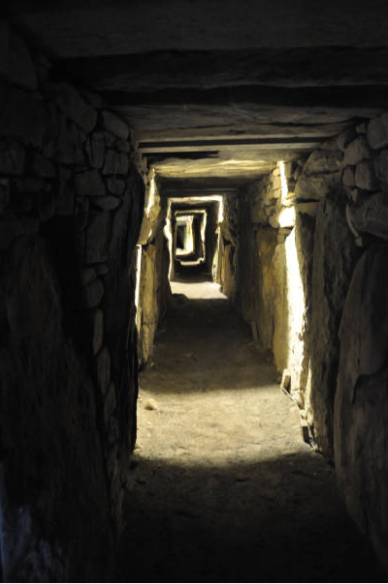
I have always grieved over a lack of connection to my ancestors, my more immediate ones, and perhaps also to those distant few who may have stood in that chamber thousands of years prior. They always felt just there, just right in front of me, yet impossibly out of reach. But as the sun started to trickle into the chamber, I felt them, and, more importantly, I felt like they felt me too.
And whatever higher powers spared us rainfall that morning, now sent those waters streaming down my face.
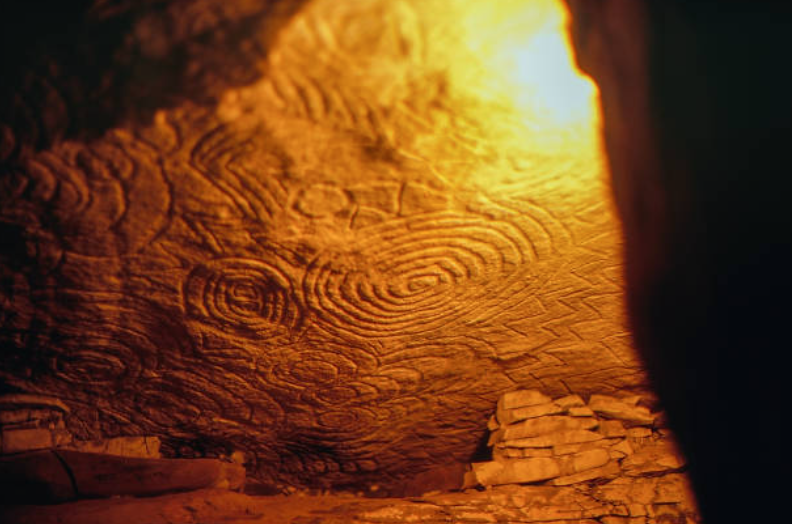
All in all, Newgrange feels like the type of place that gives you what you need. I had my personal experience, but I believe everyone visiting would take away something different, and upon realizing that, I think maybe the variety and mystery is the point.
And— I’m going to extend a branch from looper territory here— if you believe that these sites have an energetic significance, and are performing some sort of spiritual purpose, maybe, we shouldn’t bother interpreting what that purpose is. Maybe (and this is the big take away, people!), we can simply trust they’re doing what they’re meant to do regardless of our academic understanding of it.
Because that was part of the beauty of the ancient world, right? From the perspective of scientific knowledge, they understood little of what we understand today, and in turn had a vast spiritual landscape (so we imagine). They didn’t know why the sun returned, but knew that it did, and relished in the wonder of that every day.
If I knew exactly what Newgrange was built for, I may not have had the experience I had. I would have been in intellect mode, rather than open heart mode.
So going forward, I’m going to allow myself to do as the ancients did, and wonder. Not everything needs to be understood, and sure, isn’t that just grand?